
Micro-Recovery for First
Responders & Public Safety
First responders and public safety professionals work in environments where calm, focus, and sound decision-making matter. Compass & Core’s Micro-Recovery workshops provide brief, evidence-informed practices designed to fit into the realities of the job, helping professionals manage accumulated stress, restore focus, regulate after high-intensity situations, and support long-term resilience.
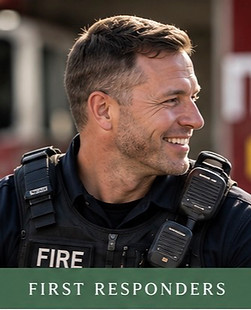
First responders spend their careers moving toward situations most people hope never to encounter. Law enforcement officers, firefighters, EMS professionals, dispatchers, corrections personnel, and other public safety professionals work in environments shaped by unpredictability, long or irregular shifts, rapid decision-making, physical demands, and repeated exposure to stressful or traumatic events.
Traditional approaches to self-care often happen after the shift. But in public safety, waiting until the end of the day to recover can mean carrying accumulated stress from one call, incident, or decision directly into the next.
Micro-Recovery offers a different approach.
These are brief, practical, evidence-informed techniques you can use in as little as 30 seconds to 5 minutes. A breathing reset before responding to a call. Releasing physical tension after an incident. Taking a deliberate pause before transitioning to the next task. Using movement, hydration, grounding, or visual recovery during a shift.
Micro-Recovery is not about stepping away from responsibility. It creates small opportunities for the nervous system and body to recover within the demands of the job, helping professionals stay focused, grounded, and prepared for what comes next.
Download our First Responders & Public Safety Edge by the Numbers and Micro-Recovery Toolkit.
Why First Responders Need Micro-Recovery
First responders routinely operate under conditions that require sustained vigilance, quick judgment, emotional control, and physical readiness. Shift work, disrupted sleep, unpredictable calls, exposure to trauma, and limited opportunities to decompress can create cumulative strain over time.
That strain does not always disappear when an incident ends.
Micro-Recovery introduces intentional moments of recovery between periods of demand, rather than relying solely on recovery after the shift. Brief breathing practices, grounding techniques, mobility resets, hydration checkpoints, and transition rituals can help interrupt the accumulation of stress and create a clearer transition from one demanding situation to another.
The goal is not to eliminate stress from a profession where stress is sometimes unavoidable. It is to give people practical tools for managing how that stress accumulates.
Download our First Responders & Public Safety Edge by the Numbers and Micro-Recovery Toolkit.
Why Law Enforcement Needs Micro-Recovery
Law enforcement officers may move repeatedly between routine interactions and situations requiring immediate vigilance, rapid judgment, physical readiness, and emotional control.
Even after an incident has ended, the body's stress response may remain activated. Without an opportunity to reset, that activation can follow an officer into the next call, conversation, report, or decision.
Micro-Recovery provides brief practices that can fit naturally into the workday, including controlled breathing before or after calls, physical tension releases, grounding techniques, hydration and movement checkpoints, and intentional transitions between incidents.
These small resets help officers regain composure, maintain situational awareness, and support their well-being across demanding shifts and careers.
Why Firefighters & EMS Professionals Need Micro-Recovery
Firefighters, EMTs, and paramedics work in an unusual rhythm: periods of waiting can shift instantly into physically and emotionally intense situations.
Emergency response may involve physical exertion, critical decision-making, traumatic scenes, disrupted meals and sleep, heavy equipment, environmental hazards, and responsibility for people experiencing some of the most difficult moments of their lives.
Micro-Recovery gives responders practical ways to create small recovery opportunities when circumstances allow. A deliberate breathing reset after clearing a scene, mobility after removing equipment, hydration after physical exertion, or a short grounding practice before returning to service can help create separation between one demanding event and the next.
Recovery does not always require leaving the job behind. Sometimes it begins with one intentional minute before the next call.
Why Dispatchers & Public Safety Professionals Need Micro-Recovery
Not every first responder is physically present at the scene.
911 telecommunicators and dispatchers may spend entire shifts listening to people experiencing emergencies while simultaneously gathering information, coordinating resources, communicating with responders, and making decisions under intense time pressure.
Corrections personnel and other public safety professionals face their own combination of vigilance, interpersonal stress, unpredictable situations, shift work, and emotional demands.
Micro-Recovery can be adapted to these environments with practices that require little or no equipment and can often be performed at a workstation: breathing techniques, visual resets, posture and mobility breaks, grounding practices, hydration checkpoints, and brief transition rituals.
The objective is simple: create small moments of recovery before stress becomes one continuous shift-long experience.
Supporting the People Who Protect Our Communities
First responders are trained extensively in how to respond to emergencies. Micro-Recovery adds another skill set: how to recover between them.
Compass & Core workshops are designed around the realities of high-demand environments. Techniques are brief, accessible, and practical enough to use during real workdays rather than requiring employees to find additional time for wellness.
Micro-Recovery can support individual well-being while contributing to healthier teams and more sustainable careers in public safety.
Stronger responders. Safer communities. Brighter futures.
Explore Micro-Recovery and workplace wellness programs for other high-demand professions.